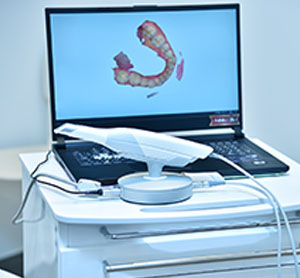
Digital impressions use a small handheld scanner to create a 3D image of your teeth, while traditional molds rely on a putty-like material you bite into. Both can produce accurate results, but digital impressions are generally faster, more comfortable, and easier to adjust if a correction is needed.
If you’ve ever had a dental impression taken, you probably remember biting into a tray of thick, gooey material and holding still while it set. For decades, this was the only way to capture the shape of a patient’s teeth for traditional braces, Invisalign® trays, retainers, or other orthodontic appliances. Today, many practices use digital scanning as an alternative. This shift is part of a broader wave of dental technology that has changed how orthodontic treatment is planned and delivered.
But what’s actually different between the two methods, and does it matter which one your provider uses? Here’s what patients should know.
How Traditional Molds Work
Traditional molds have been the standard in orthodontics for generations. The process involves filling a horseshoe-shaped tray with a soft, putty-like material and placing it over the upper or lower teeth. The patient bites down and holds still for a minute or two while the material sets into a firm, rubbery mold.
Once removed, that mold is either sent to a dental lab, where it’s used to pour a plaster model, or scanned separately to create a digital file. While this method has a long track record of producing usable results, it does come with some downsides. The material can taste unpleasant, and patients with a strong gag reflex often find the process uncomfortable. There’s also a small margin for error, meaning if a patient moves, swallows, or the material doesn’t set evenly, the impression may need to be retaken.
How Digital Impressions Work
Digital impressions skip the tray and putty altogether. Instead, a small wand-like scanner is passed over the teeth and gums, capturing thousands of images per second and stitching them together into a precise 3D model on a computer screen. Patients can often watch the model take shape in real time. In many cases, this same 3D model can be used to generate outcome simulations, giving patients a preview of what their smile may look like at the end of their treatment journey.
Since there’s no material to set or remove, this process tends to move quickly and doesn’t involve any unpleasant taste or texture. The scanner is also gentle enough that it typically doesn’t trigger a gag reflex the way a physical tray can. If a section of the scan isn’t clear enough, the provider can simply rescan that specific area rather than starting the entire impression over.
Comparing Accuracy
Both methods can produce highly accurate results in the hands of an experienced provider, but digital scanning generally offers a few practical advantages when it comes to precision. As the image is captured and reviewed instantly, any gaps or unclear areas are visible right away and can be corrected on the spot. With a physical mold, imperfections sometimes aren’t noticeable until the material has already set or the mold has been poured into a model, which can mean asking the patient to sit through the process a second time.
Digital files are also easier to store, share, and reference. Rather than keeping physical molds on a shelf, practices can save digital records electronically and pull them up instantly for treatment planning, progress tracking, or communication with dental labs.
Comfort and Convenience for Patients
For many patients, comfort is the biggest difference between the two approaches. Traditional molds require holding still with a tray in the mouth for a minute or more, which can feel awkward or trigger gagging, particularly for younger patients or anyone with a sensitive palate. Digital scanning is usually quicker and doesn’t involve holding a foreign object in place while material hardens.
Digital impressions can also shorten the overall visit. Since the images are ready to use immediately, there’s no waiting for material to set or for a mold to be sent out and processed before the next step in treatment planning can begin.
Which Method Is Used and Why
Not every case or every practice relies exclusively on one method. Some situations or certain appliances may still call for a traditional mold, while others may be well suited to a digital scan. The right choice often depends on the specific treatment plan, the equipment available, and what will produce the clearest, most usable result for that patient’s unique dental structure.
At Murphy Orthodontics, our team emphasizes that patients don’t need to worry about researching which method is “better” before their appointment. Based on training, the tools on hand, and what the treatment calls for, our orthodontists can determine which approach makes the most sense.
Key Takeaways
- Traditional molds use a putty-like material in a tray, while digital impressions use a handheld scanner to capture a 3D image.
- Digital scanning tends to be faster and more comfortable, with less risk of triggering a gag reflex.
- Errors in a digital scan can be corrected by rescanning just the affected area, rather than repeating the entire process.
- Digital files are easier to store, share, and use for treatment planning compared to physical molds.
- Both methods can produce accurate results, and the right choice often depends on the specific case and treatment plan.
Curious which method your treatment plan will involve? Schedule a consultation with Murphy Orthodontics today, and our team can walk you through every step of the process, from your first impression to your final smile.
Previous Post