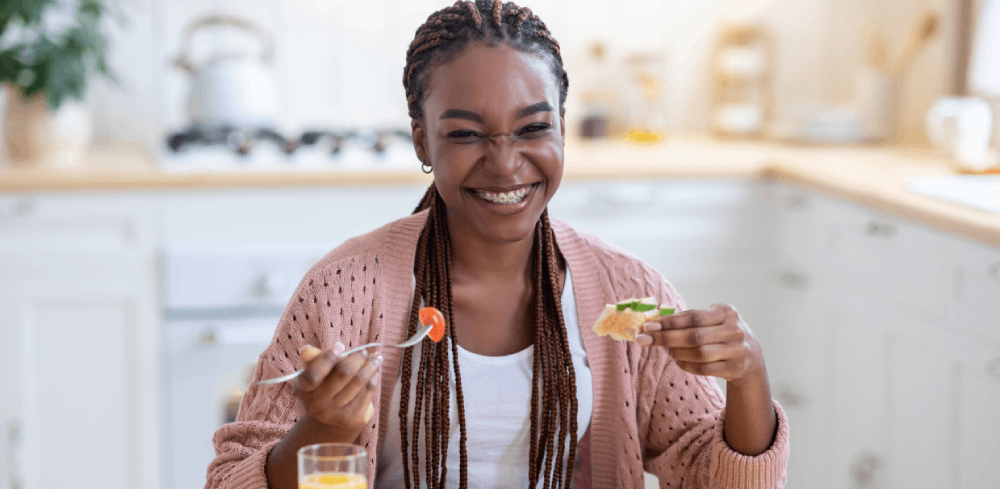
 With braces, the ideal foods are soft, easy to chew, and gentle on brackets and wires, such as pasta, eggs, yogurt, soft fruits, and tender proteins. Skip anything hard, sticky, or extra chewy, and cut firmer foods into small pieces to keep your treatment on track.
Getting braces is an exciting first step toward a healthier, more confident smile. It also comes with a common question: what can I actually eat now? The good news is that your menu is much bigger than you might think.
At Murphy Orthodontics, we help patients of all ages navigate life with traditional braces every day, and food is one of the topics we discuss most. Whether you are a teen with your first set of brackets or an adult starting treatment with our orthodontics team, this guide covers the foods that can be safe, satisfying, and easy on your appliance, plus a few to set aside until your braces come off.
Why Your Food Choices Matter with Braces
Braces work by applying steady, gentle pressure to move your teeth into place over time. The brackets bonded to your teeth and the wires connecting them are strong, but they are not indestructible. Biting into something hard can pop a bracket loose, and sticky foods can bend wires or pull at bands. Every repair can mean an extra visit and, in some cases, a delay in your progress.
Food choices also affect your oral health. Brackets and wires create plenty of little spaces where food particles and plaque can hide. Sugary and starchy foods that linger around your appliance raise the risk of cavities and white spots on your enamel. Choosing braces-friendly foods can protect both your hardware and your teeth, so your smile looks its best when treatment is complete.
Braces-Friendly Foods to Enjoy
Dairy
Dairy is one of the easiest food groups to enjoy with braces. Yogurt, cottage cheese, soft cheeses, milk, and smoothies are gentle on your teeth and packed with calcium, which supports strong teeth and bones. Pudding and milkshakes make great treats, especially on days when your teeth feel a little tender after an adjustment.
Grains and Breads
Soft grains are known to be filling and easy to chew. Pasta, rice, oatmeal, quinoa, and soft tortillas can be excellent choices. Pancakes, muffins without nuts, and soft breads work well too. Just avoid hard crusts, bagels, and crunchy crackers that require a lot of biting force.
Fruits
You do not need to give up fruit with braces. Bananas, berries, grapes, melon, kiwi, peaches, and applesauce are all great options. Additionally, firmer fruits like apples and pears can still be enjoyed if you slice them into thin, bite-sized pieces instead of biting directly into them with your front teeth.
Vegetables
Cooked vegetables are a braces patient’s best friend. Steamed broccoli, green beans, carrots, zucchini, spinach, and mashed potatoes are soft, nutritious, and simple to chew. Raw vegetables like carrots and celery can be cut into small pieces or steamed until tender.
Proteins
Protein is an important part of one’s diet, and it shouldn’t be avoided when you start orthodontic treatment. Scrambled or hard-boiled eggs, fish, shredded chicken, meatballs, tofu, beans, and lentils are all braces-friendly. Deli meats and slow-cooked dishes can be good choices as well. If you love steak or chicken breast, cut it into small pieces and chew carefully with your back teeth.
Soups and Comfort Foods
Soups can be ideal for the first few days after getting braces or after an adjustment. Chicken noodle soup, tomato soup, and creamy vegetable soups are soothing and require little chewing. Mac and cheese, casseroles, and soft lasagna are other comforting favorites.
Foods to Avoid While Wearing Braces
Some foods are simply too risky for your brackets and wires. Hard foods like nuts, ice, hard candy, popcorn, and hard pretzels can break brackets or bend wires. Sticky and chewy foods such as caramel, taffy, and gummy candy cling to your appliance and are tough to clean away. If you’re a regular gum chewer, ask your orthodontist whether sugar-free gum is okay for your specific appliance. Some patients can chew it in moderation, but in general, sugary gum should be avoided entirely. You should also be cautious with foods you bite into with your front teeth, including corn on the cob, whole apples, and crusty bread. Cutting corn off the cob and slicing fruit solves the problem easily.
It is also smart to limit sugary drinks like soda and sports drinks. Sipping them throughout the day bathes your teeth in sugar and acid, which can lead to decay around your brackets.
Tips for the First Few Days
It is normal for your teeth to feel sore for a few days after your braces go on or after an adjustment. Stick to the softest foods during this time, including soups, yogurt, mashed potatoes, and smoothies, while cold foods can help soothe tender gums. As the soreness fades, you can gradually return to a wider variety of braces-friendly foods.
No matter what you eat, good hygiene makes a big difference. Brush after meals when you can, floss daily with a floss threader or water flosser, and rinse with water after snacking. These simple habits help keep your teeth healthy and your treatment moving forward.
Is Clear Aligner Therapy a Better Fit?
If the dietary adjustments that come with braces feel like too much, clear aligners such as Invisalign® may be worth considering. Since aligners are removable, you can take them out to eat. This means there are generally no restrictions on what foods you’re able to enjoy. The tradeoff is discipline: aligners need to be worn about 20 to 22 hours a day, and it’s helpful to brush before putting them back in to keep food from getting trapped against your teeth. Our team can help you decide whether aligners or traditional braces are the right fit for your smile goals.
Key Takeaways
- Soft foods like pasta, eggs, yogurt, soups, and cooked vegetables are generally safe and easy to enjoy with braces.
- Firmer foods such as apples, raw carrots, and meats can still be eaten when cut into small, bite-sized pieces.
- Avoid hard, sticky, and chewy foods like nuts, popcorn, and caramel to prevent broken brackets and bent wires.
- Stick to the softest options and cold foods for a few days after getting braces or after an adjustment.
- Brushing, flossing, and rinsing after meals helps prevent cavities and keeps your treatment on schedule.
Braces should not mean giving up the foods you love, and our team is here to help you make smart choices every step of the way. If you have questions about eating with braces or are ready to explore our orthodontic services, we invite you to contact our practice today to schedule your consultation.
Previous Post